Showing posts with label mother. Show all posts

Thursday, June 21, 2018

On the Path to Humanbecoming

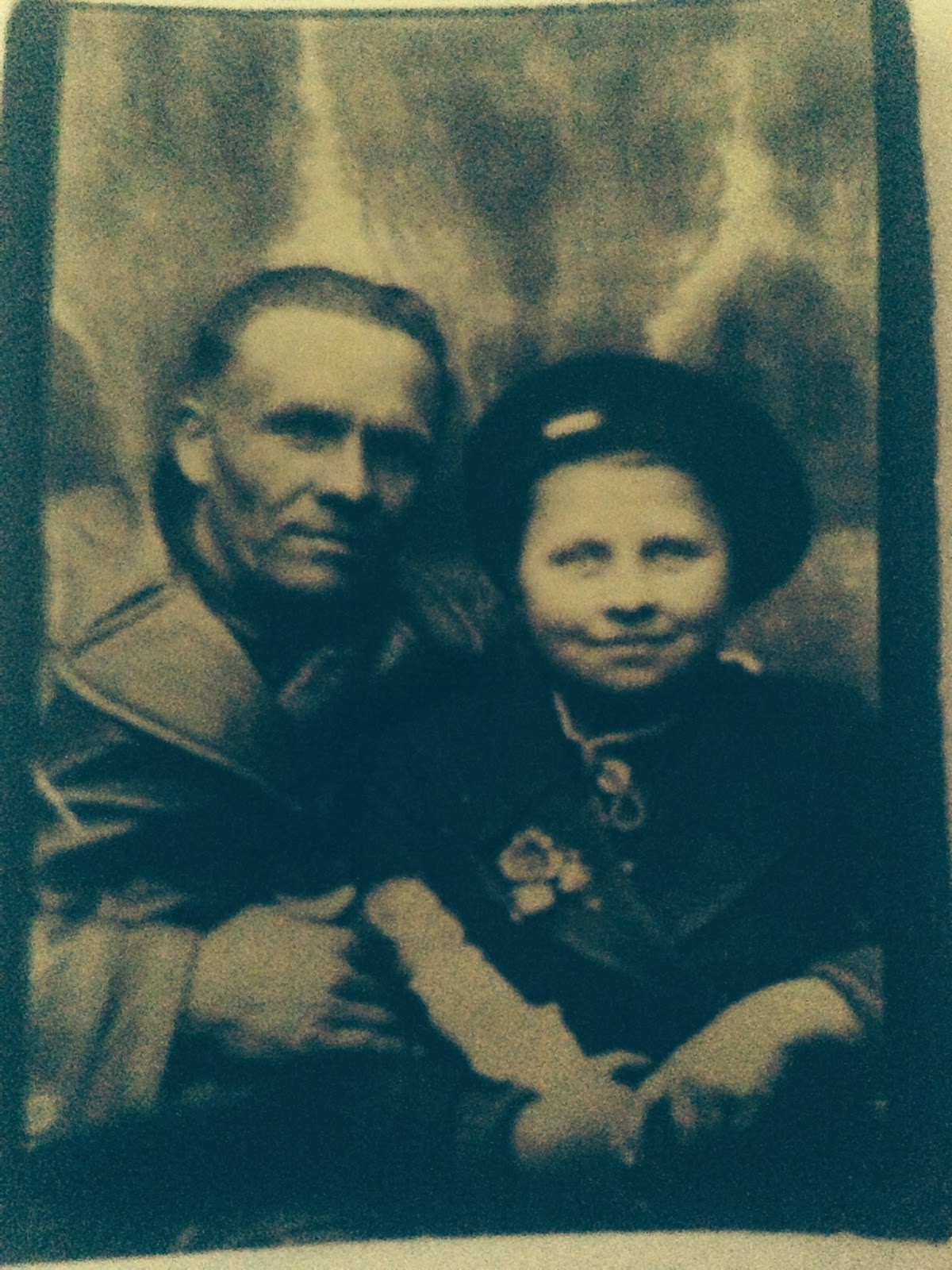
“You’re just like your father,” my mother would say, hundreds, if not thousands, of times, often as a back-handed compliment.

She accused me of “acting like a Communist, drinking from the same glass as others,” even though she accepted Holy Communion from the same cup as others. My father, a card-carrying Social Democrat, imparted his progressive views to me as part of a humanist education. Even though my parents were at odds politically (and, moreover, both politically active), my mother respected my father for his moral and ethical values and actions.

My father was patient (when he wasn’t brimming with the rage that comes from enduring tyranny), a professor who had to thole thousands of pages of poorly written essays which didn’t begin to demonstrate even a basic understanding of the economic theory he so clearly explained, dumbing it down to a level that made his soul quake. There were the exceptions, the scholars who were misled into studying business or finance, who truly understood the underlying value of mastering economic principles and how those principles permeate our greater (or, too often, lesser) existence in an alleged free-market economy and so-called democracy. Fewer were those who embraced Brother Mike’s teaching to better comprehend how unjust life is for the majority of humanity throughout the world. Many of his students weren’t in classrooms. A scholar by spirit and nature, he would lecture to anyone willing to sit and listen. And those who have done so have been captive for hours.

If only my verbosity were layered with Brother Mike’s depth of knowledge and prowess to connect the most sophisticated ideas across disciplines, all rooted in his primary scholarly pursuit: philosophy.


There is so much I didn’t say. So much I did say that I regret. I only hope that the sweeter side of my mother’s sentiment may eke out at an odd moment, elevating me, even for a fleeting second, to the status of “humanbecoming.” He would often say “there are so few human beings,” that to be a “humanbecoming” is an accomplishment in our grossly corrupt and thoughtless society.

We threw an intimate surprise party for my dad’s 70th birthday, where he joked “what do you all know? Am I dying?” Even his most profound and spiritual revelations were peppered with a trademark humor that was lost on some of shuttered mind. He also publicity acknowledged my mom that day as a humanbecoming, which she knew was mighty praise, never doled out carelessly.

At the time, we had no reason to suspect his 80th, 90th, and 100th birthdays would become memorials. Having never swallowed so much as an aspirin, exercising and swimming daily, laboring  every day in the yard, and working as a professor (employed at the time of his death because he had never taken a sick day), Brother Mike’s last physical revealed, in his primary care physician’s words “a man healthier than my 30-year-old patients.”

Diagnostic tests at the time of the physical included a sigmoidoscopy, which the PCP claimed “came back clear.” Just 10 days later, my mother noticed that my father’s extremities were very cold and covered him with blankets as he reclined in his dilapidated chair to read. “Mike,” she insisted, noticing a sudden decline in his vigorous physical activities along with an uncharacteristic loss of appetite. “You have to see a doctor.”

I know I am maligned by some for loathing the area where I grew up, but it had already become a healthcare wasteland, and my “healthier-than-a-30-year-old” father, who never picked up a cigarette and drank only socially, went into surgery the following day to remove “a single tumor from the sigmoid section of his colon.” The former military doctor had been applauded by the insurance-fraud-machine hospital system monopoly in the geographic area, as “precise.” Perhaps the U.S. military taught this surgeon to carefully maneuver a scalpel, but it failed at conveying any need for compassion, empathy or a basic ability to communicate with family and patients. For the record, my father served in two wars for the U.S. Army, and came out as a humanist. This surgeon, who was not approaching humanbecoming, strode into the family waiting room and briskly instructed my mother and I to “go into the private room.”

In that isolation chamber, he gestured for us to sit, and blurted out: “the good news is the surgery went well, and he’s fully conscious. The bad news is the cancer spread to all of his vital organs and he has about six months to live. I have to leave for the long weekend, so one of you has to tell him. Also, tell him he has a colostomy bag.”

As I began to hyperventilate, the surgeon shook his head in disgust and told my mother, “she has to calm down or she’ll faint.” My mother said: “I can’t tell him, and look at her, she obviously can’t do it.” He rolled his eyes and told my mother, “Like I said, I have plans for the long weekend. I’m running late. This is your responsibility.”

“What about my daughter?” my mom asked him.

“As I said, she needs to calm down. I can get someone to get her a chaplain to talk to, but it may take awhile.” Without so much as an attempt at eye contact or a tap on the shoulder, he waltzed out.

I managed to use the phone to call my childhood friend Erica, who somehow interpreted my cry-screams, found a neighbor to watch her then-young children, and disregarded multiple traffic laws to race some 18 miles and hold me.

Erica is one of my dad’s students. Not in a classroom (she and I were undergraduates together at a different school), but during countless hours spent in my parents’ home. “She’s brilliant,” he boasted. His delight was irrepressible when she changed her undergraduate from something called hotel, restaurant, and travel administration, to his primary passion philosophy. No doubt Erica was a humanbecoming in the eyes of Brother Mike.

I hope my mother is right, that I am at least the slightest like my father, save for the (occasional) rage which I fully acknowledge as cultivated on my own. I lack his deep well of expertise across subjects and have fallen so far from scholarship, not only leaving behind graduate degrees despite competing coursework, but failing to read voraciously. I do hope I impart a glimmer of his moral teachings to my son, Michael Alexander, who clearly already has achieved humanbecoming. Like a broken record, I lament every year that the pain of loss stings deeper s he never knew his only grandson or my husband, Mike (Michael Damian), who also would have earned Brother Mike’s designation of humanbecoming.

Related Reading


Saturday, January 25, 2014

‘The Chaos Of Antiquity’ Forever Haunts a Disputed Borderland


The written or recorded history of Belarus gets stranger with modern interpretation, especially with the nationalistic pride that marginalizes its inhabitants. My mother and her parents have never identified as Belarusian, they consider themselves ethnic Russians who were born in Belarus. They all were born and lived so close to the Russian border that my maternal grandmother carried my infant mother into Russia to baptize her.

Belarus literally translates as White Rus, and had for years been called White Russia, a name considered derisive by Belarusian nationalists, but still widely used in many languages and countries. Rus is not short for Russia. Kievan Rus was a powerful East Slavic state dominated by the city of Kiev, which is the modern day capital of Ukraine. Rus dates back to the 9th century and is traditionally viewed as the beginning of Russia and the ancestor of Belarus and Ukraine, though this theory is often disputed. Kiev is regarded as the original Holy Russian Empire, because Vladimir the Great, the pagan Slavic ruler of Kievan Rus, in 988 converted the state to Orthodox Christianity.

Some cite Slavic lore that claims Vladimir chose Orthodox Christianity over the teaching of Muslim missionaries because his people liked to drink wine, a practice prohibited by the Muslim faith. His motive was unlikely a spiritual one, at any level. Vladimir married the Byzantine emperor’s wife and viewed the establishment of a church as essential to development of a powerful state. Kiev traded fur, animal hides, burlap, hemp and hops in exchange for Byzantine wine, silk, steel blades, religious art and horses. Byzantine imperial ideals clearly influenced Russian political life. Kievan Rus was effectively eliminated in 1237, when Batu Khan, a grandson of Genghis Khan, invaded and over three years the Mongols (or Tatars) destroyed all of the major cities of Kievan Rus except Novgorod and Pskov. The regional princes were not deposed, but were beholden to the Tatar state, which became known as the Empire of the Golden Horde. Both the Swedes (in 1240) and the Livonian Brothers of the Sword, a regional branch of the Teutonic Knights, (in 1242), pounced but failed to defeat “Russia” or Rus.

At the time of the Tatar invasion, modern-day Moscow was an insignificant trading outpost, but its remote, forested location buffered it from attack and occupation, and its rivers provided access to the Baltic and Black seas and to the Caucasus region. It was the rule of ambitious princes that gave rise to the state of Muscovy: Daniil Aleksandrovich secured the principality for his branch of the Rurik Dynasty, which was founded by Varangian (Viking) prince Rurik and ruled Kievan Rus after 862. His son, Ivan I, was given the title "Grand Prince of Vladimir" from his Mongol overlords, and he cooperated closely with the Mongols to gain control over Muscovy's chief rival, the northern city of Tver. In 1327 the Orthodox metropolitan transferred his residency from Kiev to Moscow, shifting spiritual power from Kievan Rus to Moscow, even as the Tatars presided over the political state until 1480. While Eurasianism is still emerging in the study of Russian history, the Asian influence and identity have been dominant since the rise of the tsars. A third of Russian nobles had Tatar names and Ivan the Terrible descended, on his mother’s side, from Genghis Khan.

Rather than delve deeper into this part of history, I want only to suggest that while the Vikings may have their roots in my mother’s birthplace -- archaeologists in September 2012 found Viking artifacts from the 10th and 11th centuries in Vitebsk Oblast – her national identity may be built on Tatar ideology and bloodlines. This makes the term “White Russia” that much more contested. My maternal grandmother had blue eyes and translucent light skin that had to be shielded from direct sunlight. My maternal grandfather had dark eyes and hair and an olive complexion. My mother has blue eyes and an olive complexion that tans quickly and never burns. My mother knows very little about her father’s parents, other than they were born “somewhere in Russia.” However, a Tatar heritage might explain why my maternal grandfather left the Soviet Army, why so many members of his family were brutally killed by the Belarusians, why he, his wife and children were targets of the Belarusian Partisans, as well as Stalin and the Nazis. It would also explain his loyalty to the Holy Russian Empire, even its seat in Moscow.

In “The History of Peter the Great, Emperor of Russia,” Voltaire states: “It is not my business in this place to inquire, why the countries from Smolensk, to the other side of Moscow, were called White Russia, or why (German geographer Johann) Hubner gives it the name of Black, nor for what reason the government of Kiev should be named Red Russia.”  It's important to note that Voltaire wanted to "make myself Russian," and created an alter-ego using the persona of a Russian diplomat, Ivan Alethof, as the “author” of his 1760 poem "The Russian in Paris.” 

“It is very likely that Madies the Scythian, who made an irruption into Asia, near seven hundred years before our vulgar era, might have carried his arms into these regions, as Gengis-Khan (sic) and Tamerlane did afterwards, and as probably others had done long before Madies. Every part of antiquity is not deserving of our inquiries; that of the Chinese, the Indians, the Persians, and the Egyptians, is ascertained from illustrious and interesting monuments; but these monuments suppose others of a far more ancient date, since it required many ages to teach men the art of transmitting their thoughts by permanent signs, and no less time was required to form a regular language; and yet we have no such monuments even in this polite part of Europe. The art of writing was a long time unknown to all the North: the patriarch Constantine, who wrote the history of Kiev in the Russian language, acknowledges, that the use of writing was not known in these countries in the fifth century.”

“Let others examine whether the Huns, the Slavs, and the Tartars, formerly led their wandering and famished tribes towards the source of the Boristhenes (the antiquated term for the Dniepr River and its eponymous river god); my design is to show what czar Peter created, and not to engage in a useless attempt, to clear up the chaos of antiquity. We should always keep in mind, that no family upon earth knows its first founder, and consequently, that no nation knows its first origin.”
 
Many have, since Voltaire’s account from 1857, made exhaustive efforts “to clear up the chaos of antiquity,” generally to rewrite a history that lends to rabid nationalism. But as new genetic data emerges this misguided pride is called into question.

Belarusians together with Ukrainians and Russians represent the East Slavic linguistic group, largest both in numbers and territory, inhabiting East Europe alongside Baltic-, Finno-Permic- and Turkic-speaking people. There have been until very recently only few genetic studies performed on this population.

A June 2013 research article, “Uniparental Genetic Heritage of Belarusians: Encounter of Rare Middle Eastern Matrilineages with a Central European Mitochondrial DNA Pool,” published in PLOS ONE, found that 80% of the paternal Belarusian gene pool is composed of R1a, I2a and N1c Y-chromosome haplogroups, a profile very similar to Ukrainians and Russians.

The Y-chromosome reflects movements of people in central-east Europe, as early as the start of the Holocene (beginning at the end of the last Ice Age about 11,000 years ago and characterized by the development of human civilization.)  The matrilineal legacy of Belarusians retains two rare mitochondrial DNA haplogroups, N1a3 and N3, both of Middle Eastern origin.

As Eurasian studies begin to displace Slavic studies at major universities and more DNA analysis becomes available to scholars, the ethnic identity of Belarusians, or at least the people born there, may help us correct the complicated history of a population that has withstood a perpetual warpath. My own desire to understand why so many members of my mother’s family have been brutalized and killed drives my interest in the science as well as the social history and historical sociology that has yet to gain any wide spread recognition. My own scholarly experience has been colored by either national identity (no matter how subtle) of my professors, as well as myriad incarnations of Slavophilism adopted often by non-Slavs. Much of what I was taught is at odds with what I see when I look at photographs of my mother’s father and grandfather.


Saturday, December 14, 2013

Of Guilt and Self Punishment


A testament to how little is written or discussed of the lifelong emotional impact of watching other people die, even a voracious lay consumer of psychological and medical research and studies as myself hadn’t heard the word “survivor’s guilt” used in the context of my mother’s early childhood until seven years ago. Not a single doctor treating my mother has ever expressed it, and the countless doctors who treated my maternal grandparents for a variety of ailments never made any connection. None have ever seemed to comprehend how and why she’s still so traumatized and often acts, by the standards of practitioners of Western medicine, erratically, irrationally or with extreme sensitivity and volatility. As a teenager, my husband watched as someone very dear to him killed herself. This, to me, is an unimaginable horror – the stuff of nightmares, the kind I’ve had. It’s especially challenging for me to articulate empathy in any profound way that would make my mother understand how passionately I strive to recognize the emotions she experiences. Sharing such emotions isn’t easy and it may not be healthy. Those nightmares were chronic in my early childhood and pre-adolescence, and only began to taper in frequency in my mid-teens. Many would be of what I imaged as concentration camps or people hovering over mass graves as their loved ones were piled into pits like compost. Naturally all these images were based on what my mother and her parents had endured.

My mother with her mother, 1949. My mother with her
father, 1947. Both photos taken in Hanover, Germany. No photos exist of my mother before the displaced persons camp in Hanover. 

Sigmund Freud referred to survivor’s guilt following his father’s death, in a letter to his friend, otolaryngologist (ear, nose, and throat doctor) Wilhelm Fliess, referring to “that tendency toward self-reproach which death invariably leaves among the survivors.

Simply put, it’s the feeling that you have harmed others, especially loved ones, just because you were spared death when they died. The term "survivor syndrome" was coined in 1961 by psychoanalyst W.G. Niederland, who in the 1950s began studying concentration camp survivors.

Among survivors of World War II concentration camps, guilt is sometimes manifested in strange yet subtle forms, such as behaving as if they themselves are dead, inhibiting themselves from success or engaging in self-destructive acts in response to survivor’s guilt in regard to a dead parent or sibling, A H Modell revealed in a seminal article published in 1971 in The International Journal of Psychoanalysis. I recall one instance when my grandfather lied down under his car, acting as if he were dead. I was a young teen. I was horrified. I knew it had something to do with his experiences, and I felt guilty for lacking the psychological study to identify his condition. (I have an unsupported theory that survivor’s guilt is passed down to the next generation more so than other forms of guilt.)

“Survivor's guilt constitutes the failure of the psychological immune system to grapple with tragedy of great magnitude. Like an infection that overwhelms the body's immune system, survivor's guilt overwhelms the psychological immune system. Instead of exaggerating the difference between oneself and a victim, the similarity is what strikes people as most obvious. ‘That poor guy was no different from me; it could just as well have been me instead of him.’  With survivor's guilt, the differences between oneself and another person shrink, and so too do the differences between what actually happened and what could have happened. As with a bad infection, the best recourse is medical treatment,” writes Neal Roese, Ph.D., in his 2005 book, “If Only: How to Turn Regret Into Opportunity.”

I find this fascinating, as I've often wondered if there was any correlation between people of my mother’s (and grandparents’) immigration and a proliferation of autoimmune diseases. I rarely share this premise, as finding Western medical professionals who even discuss something that’s not published in a study they read or wrote is generally impossible. In any case, I know more than most people outside of endocrinology about autoimmune diseases as it took decades for me to find a doctor to properly diagnose mine. I'd been confident for years that I had some form of autoimmune hypothyroidism, as my maternal grandfather suffered from hypothyroidism and my mother had a thyroidectomy. My grandfather wasn’t diagnosed until it was too late, when he was hospitalized for what may have been delayed symptoms of a nearly fatal car crash that he “miraculously” survived, doctors and first responders told me at the time. (At 15, I was in the ambulance and in the operating room with him.) My mother’s hypothyroidism also went undiagnosed and untreated for decades. Doctors blamed my symptoms on anything else, even my own behavior, and refused to send out blood work for a quick, simple and cheap test of free levels of triiodothyronine (T3) and thyroxine (T4), which together regulate your body’s temperature, metabolism and heart rate, because my "TSH (or thyroid stimulating hormone) is fine." Finally, I found a doctor who’d written an article on a study that articulated exactly what I’d been telling other doctors, and he immediately diagnosed me with Hashimoto's thyroiditis, a genetic disease. My mother’s mother had rheumatoid arthritis, and my sister is afflicted with RA, along with Lupus and Raynaud's phenomenon (RP) – all autoimmune diseases.  So many people I knew growing up from the same immigration also suffered from various autoimmune diseases, while diabetes and heart disease was extremely rare in this community. These people grew their own vegetables and fruits, fished and only bought meat if they knew how the animal was slaughtered. This was in the third-largest city in Massachusetts and fourth-largest in New England. My grandparents kept hens in a perch of shelves that my grandfather build into a one-car garage, grew dozens of vegetable varieties and berries, and even kept and slaughtered their own pigs. I often went fishing (at a nearby lake) and mushroom picking (at a nearby forest) with my grandfather. I picked berries from the small yard and helped collect eggs from the hens. My grandfather volunteered as a beekeeper at the monastery where he’s now buried on his vacations from factory work and brought home the equipment to keep hives in the yard.

My unexamined autoimmne hypothesis aside, there’s been even less done to psychologically diagnose these people and treat their obvious survivor’s guilt and often posttraumatic stress disorder (PTSD). This is an unforgivable failure of our mental health system and our society at large. America has welcomed the “wretched refuse of your teeming shore” but it has done nothing to help those huddled masses heal from the incomparable suffering of surviving war after war. PTSD and survivor’s guilt is so rarely used in conversations about anyone but U.S. military veterans. Unarmed civilians suffer far more than soldiers. PTSD and survivor’s guilt are often confused, even by trained specialists, but they are very different phenomena. While PTSD is psychopathological phenomenon, survivor’s guilt is more of an expression of a normal concern for other human beings, both as individuals and as a society.

My intention is never to undermine the struggle of soldiers. My father was a decorated veteran who served in the South Pacific and in Korea, and is immortalized in The New Orleans D-Day Museum. Many men in my family have served in numerous wars and conflicts. But when they volunteer or they’re drafted or recruited, soldiers are warned of the trauma to come, even if they cannot effectively prepare for it. Even the most distressed societies make an effort, and often a promise, to protect civilians, yet no adult or child ever is warned of the sudden terror that leads to destruction of what was a civil society. My mother also was robbed of a childhood, adding another level of stress to her guilt.

“The various effects that adults who were child survivors experience can be attributed to many aspects of their traumatic exposure. Children and adults were treated differently in the camps and consequently their emotional reactions were different. Children were likely too traumatized during the war to experience ‘true’ childhood,” writes Fara Kaplan in “Holocaust Survivors and Their Children: A Search for Positive Effects” published by The American Academy of Experts in Traumatic Stress. “Also, because the child's identity had been in a state of development, their experiences may have remained buried in their memory (i.e., unconscious). This may have impeded their ability to empathize with others and likely negatively affected their adjustment to their own offspring.”

For my mother, the survivor’s guilt from early childhood is compounded by the losses of her parents and my father, all of whom she cared for at home until their deaths from very serious illnesses. The Russians (and Eastern Slavs) I knew growing up did not sentence their sick and old to death in nursing homes. “How can I do that to my parents when they didn’t let me die?” my mother has said, or stated, many times. Of course, she was equally compelled to care for her dying husband. My grandfather’s illness was, mercifully, short-lived: he died about a year after he became bed-ridden, his wife and his daughter as his constant bedside companions. After he died, my grandmother was bedridden for nearly nine years, her (long undiagnosed) brain atrophy prohibiting her from speaking. She would, however, sometimes cry in a chanting tone that clearly signified the mourning of her loved ones, especially her infant sons.  My father was diagnosed with Stage IV colon cancer, metastasized to the liver, shortly after my grandmother died. I’ll spare the details of what such care involves, as I know most Americans lack the palate for visceral reality. But my mother completely gave up her life from 1987 until 2002. She hasn’t recovered from that trauma enough to indulge in what are very basic creature comforts for the average American, such as treating herself to a movie or a vacation – ever.

In a 1972 article in Psychoanalytic Quarterly, Stephen M. Sonnenberg, M.D., cites a case study involving a patient who felt guilty that her husband had died during surgery she authorized, after caring for him during a nine-month illness. “She also expressed feelings of guilt concerning the murder of her parents and younger sisters by the Nazis,” notes Sonnenberg.

“With (her husband’s) death, she not only felt guilt concerning him but she lost the opportunity to expiate her long-standing guilt by being a good nurse. In her unconscious, it was as if she had willed the suffering of her past loved ones in an effort to be close to them. Thus, guilt over past events became overwhelming. It would seem that this patient was a guilt-laden woman who lost a guilt-expiating object and at the same time underwent an experience that confirmed her past and present guilt. Signing for 'experimental' surgery was perhaps the final burden, and her obsession over it became clear in her treatment. While she insisted that her husband's good health had been her goal, she also felt that she was a 'murderer.’ Depression was present when anger at the lost object was conscious and when identification with the lost object did not exist. It was the strength of her guilt that made her feel so hopeless and depressed.”

Shulamith Kreitler, Frida Barak, Yasmin Alkalay and Nava Siegelman-Daniel conducted study of 195 family members of cancer patients who had been involved in the care of the patients and had a continuous relationship with them, which found that that survivor’s guilt is prevalent among the caretakers of cancer patients.

“It is distinct from the experiences of guilt and of remorse,” they wrote in paper “Survivor’s Guilt in Caretakers of Cancer” based on the study. “Survivor’s guilt is an affective response rooted in deeper layers of the personality. Most importantly, the observations about the correlates of survivor’s guilt six months following the patient’s death support the theses that survivor’s guilt exerts a pro-social impact on the person’s behavior and that it helps maintain the presence of the deceased in the life space of the survivor. Both of these effects led the deceased a kind of metaphorical immortality, thus helping the survivor preserve his or her own sense of immortality and the sense of continued contact with the deceased. In these respects survivor’s guilt contributes to overcoming death, at least on the psychological level.”

This desire to commune with the dead also plays into my mother’s religious beliefs and practices. Russian Orthodox Christians do not close the casket until it is taken from the church to the cemetery. My grandmother’s body was returned to my parent’s home where she died after being taken to the funeral home. A wake was held at home, with many non-Orthodox Christians in attendance, and kept my grandmother there until being transported 166 miles away to the monastery church. (I drove my mother’s car, following the hearse, which was nearing speeds of 100 mph. It was exhilarating.) Psalms are read over the body continuously and throughout the night until the funeral begins. In the words of the fathers of the seventh ecumenical council: “God re-created man in immortality, thus bestowing upon him a gift which could no longer be taken away from him.”

Nietzsche said Dostoevsky was “the only person who has ever taught me anything about psychology.” In Dostoevsky’s work, guilt and sin are existential conditions of man, and each of us is somehow guilty of everyone’s sins. Nietzsche began reading the work of Dostoevsky, who died in 1881, in 1887, finding inspiration in a fellow challenger of the fundamental world view of the Enlightenment. Religious belief is what divides the two. Dostoevsky ultimately believes in salvation and therefore an afterlife, a view Nietzsche boldly rejects. But they share a very similar perspective on guilt.

The confession of Raskolnikov, which leads the protagonist in Dostoevsky’s Crime and Punishment to prison, clearly had a profound impact on Nietzsche’s philosophy.

"Throughout most of human history, punishment has not been meted out because the miscreant was held responsible for his act, therefore it was not assumed that the guilty party alone should be punished: but rather, as parents still punish their children, it was out of anger over some wrong that had been suffered, directed at the perpetrator, but this anger was held in check and modified by the idea that every injury has its equivalent which can be paid in compensation, if only through the pain of the person who injures. And where did this primeval, deeply-rooted and perhaps now ineradicable idea gain its power, this idea of an equivalence between injury and pain? I have already let it out: in the contractual relationship between creditor and debtor, which is as old as the very conception of ‘legal subject’ and itself refers back to the basic forms of buying, selling, bartering, trade, and traffic." _ Nietzsche, On the Genealogy of Morals (1887).

It’s impossible for me to imagine a guilt more “primeval, deeply-rooted” than survivor’s guilt.


Thursday, November 14, 2013

The Goal and Intention of Lubachka, The Novel


Lubachka is not an attempt to write or rewrite a controversial period of history that has been recorded with great inaccuracy, sometimes as a result of intentional bias but more often because the memories of survivors are as convoluted as the emotional trauma and psychological struggle that accompanies such experience. Each survivor's experience is unique and powerful as a tool for comprehending how war impacts civilians and forever changes their lives. The collective history is told only through battles, and how the seats of power are shifted. That the weaponry and strategy continues to interest people, particularly those who have never served as soldiers, speaks volumes about the psyche. Americans, in particular, are inclined to focus on these details in order to distance themselves from the suffering of people like my mother. I lack any ability to connect intellectually with adults who tinker with toy soldiers like a sheltered child. It is cultural history, not military history, that, utilizing narratives such as Lubachka, can help us begin to understand humanity. Battle logistics are only significant in tracing the paths of those who were lost at war and those survived. The important story has been buried in the daily lives of people like my mother.

Through the lens of those who witnessed horrific atrocities comes profound and important insight into humanity, which must be considered alongside the triumphant accomplishments of humanity, such as great art and literature, both contemporary and contemporaneous.

As a former scholar (of literature not history) and as a journalist for more than two decades, I approach this project with the research skills I have developed. This is not, however, intended as a sweeping academic or investigative work. It is a layman's effort at contributing to the memory and shared experience of survivors like my mother, regardless of nationality, ethnicity or religion.  Any statistics I cite are official, and I intentionally avoid engaging in any debate over the “real” numbers that break down how many were killed or died based on ethnic or national profile.

My mother and her parents identify themselves as ethnic Russians, though they all were born in Belarus, so close to the Russian border that my grandmother walked to church in Russia to baptize my mother. There are many confusing details regarding when and why certain people were sent to specific camps, and my mother and her parents were often the minority ethnic population at a particular camp even when there were more facilities designated for Russians. It is significant to note that while Belorussians were often counted differently from Russians (largely because of the Partisan resistance movement of which my mother and her parents were targets), Ukrainians are generally lumped into the Russian category on official statistics. I am a quarter Ukrainian and a quarter Polish on my father’s side. That alone is reason enough for me to avoid any conversation or conflict stemming from national or ethnic pride. My mother is Russian Orthodox and any discussion of religion serves to bolster the cultural context of heinous crimes committed against people of many different faiths.

Lubachka is largely based on my mother’s early childhood memories, but it is written by me. My mother chose to not write this herself, nor did she commission me to write it.  She did, however, speak openly about an extremely traumatic period of her life. This is not a fictionalized account, nor is it written from my mother’s voice. I welcome critics for everything I publish, professional and personal, but I am not making any claims that are intended to set straight a record or undermine other people’s accounts. I welcome any information that might broaden my own understanding of the events surrounding my mother’s experience.

I’ve grown up in a world where “educated” people (those who have earned at least a bachelor’s degree from a college or university) have used the term Soviets after 1991 to describe people who live in (or hail from) countries bordering Afghanistan, China, (the former) Czechoslovakia, Finland, Hungary, Iran, Mongolia, North Korea, Norway, Poland, Romania and Turkey. My frustration is nothing compared with my mother’s. Imagine watching all your siblings die in infancy and surviving concentration and slave camps only to be met with ignorance in a free America where you are marginalized and ostracized by people who were brainwashed by McCarthyism.

This is intended as an explainer, not a disclaimer. I am not Lubachka, but of course I am psychologically and socially impacted by my mother’s life story. Every effort is made to present information without cultural bias, using historical documentation as a framework for the events and experiences she describes. This is a deeply emotional account and I strive to represent all information with integrity.

Thursday, October 31, 2013

Grave Matter: The Privilege of Proper Burial


Many, if not most, Americans I know generally put off planning for funerals, picking burial plots and selecting tomb stones as long as possible. I’ve known people who have had to make final arrangements for elderly loved ones, something unthinkable for my mother and her parents. Leaving that responsibility – financially, emotionally and socially – to another person would be cruel, unfair and well, unthinkable. Beyond the added benefit of the cost savings that comes with paying in advance and the comfort of knowing that everything will be executed properly, there is a compelling reason why people like my mother and her parents take pride in such morose tasks. My mother’s brothers – among dozens more family members and childhood friends – were dumped into mass graves that have never been marked, unearthed or in any way recognized as burial places.
 

Of all the villages I’ve researched in Vitsebsk Oblast, Lemnitsa is by far the most elusive. My (for lack of proper term) cousin, Tanya Grishayeva (her paternal grandfather was my maternal grandfather’s younger brother), who was born in Mozyr, Belarus, and now lives in Minsk, helped me cobble what little information – mostly photographs -- is out there.

Perhaps one day the government or an organized group in search for bodies of fallen soldiers will get around to excavating Lemnista, the burial place of my mother’s three brothers who died in infancy. In September 2011, the remains of soldiers of the Red Army were discovered near the village of Noviky, Vitebsk, as part of the CIS International Memory Watch 2011. The effort includes volunteers from Belarus and Russia seeking unearthed remains that will be re-interred in one of the mass graves in Vitebsk Oblast.

For now, the village of Lemnitsa seems lost in time, with a grainy image of a 19th century
water mill that was destroyed and mention of a church in honor of Saints Kosmy and Damiana (Orthodox Saints Cosmas and Damian, or Kosmas and Damianos in Greek) built in 1836 but destroyed around 1910, among the little evidence such a place exists.


There is a haunting consolation that comes with learning that the ghosts of brothers (in some stories, twins) Kosmy and Damiana share my uncles’ burial place. Their history represents a trinity of stories, one for each of my mother’s brothers: Pyotr (Peter), Mikhail (Michael) and Ivan (John.) The Holy Trinity is a key belief in the world’s second-largest (yet most often neglected and ignored by the West) Christian church, and the theme permeates culture, literature and secular life. By the 4th century, a polarity developed between Eastern and Western Christians over their respective understandings of the Trinity. The West viewed God primarily as one essence (the Trinity of Persons being conceived as an irrational truth found in revelation), while the East considered the tri-personality of God the primary fact of Christian experience. The Cappadocian Fathers (Gregory of Nyssa, Gregory of Nazianzus and Basil of Caesarea) were accused of being tri-theists because of the personalistic emphasis of their conception of God. Modern Orthodox theologians tend to emphasize this personalistic approach to God.

Orthodox Christians celebrate three different sets of saints by the name of Cosmas and Damian, each with their own feast day:

·      Saints Cosmas and Damian of Cilicia of Arabia on Oct. 17. Legend claims the brothers were beaten and beheaded together with three other Christians: Leontius, Anthimus and Eutropius.
·      Saints Cosmas and Damian of Asia Minor or Mesopotamia on Nov.  1. This story offers some solace with the twins sons of Saint Theodota dying peacefully and being buried together at Thereman in Mesopotamia. Note that my mother’s brothers Mikhail and Ivan were twins.
·      Saints Cosmas and Damian of Rome on July 1. In another Christian tradition, the brothers were martyred outside Rome by a jealous pagan physician during the reign of Roman Emperor Carinus (283–284).

St. Michael's Church in Munich as well as the convent of the Poor Clares in Madrid claim to have the skulls of Cosmas and Damian. For Orthodox Christians like my mother, the need to worship and believe in the authenticity of such relics is powerful. Imagine as a young child not only watching all three of your siblings suffer and die, but also to never know exactly where they were buried or have any way of paying proper respects.

This makes the opportunity to choose and arrange for your own final resting place something of a privilege. I do respect anyone’s desire to decide how their own body will be treated upon death and how they will be remembered. But I always shudder when I learn of people who bury loved ones without any sense of tradition or ritual, assuming that is what the deceased had intended. I believe that those who want no ceremony or guests clearly state such desires long before their demise, and such requests are to be honored. But the notion of simply cremating or arranging for burial without even a dinner featuring the departed’s favorite food or a gathering of some kind, albeit secular and informal, is to me a form of neglect.

Most of the images that exist online of Lemnista are of a railway station connecting the village to routes into Russia, Ukraine, Poland and Lithuania. A photo of the passenger building at the station is especially eerie, as there are two rectangular cement-enclosed flower beds in the parking lot that resemble the open grave covers filled with flowers at the cemetery at Holy Trinity Monastery in Jordanville, N.Y., where my mother’s parents and my father are buried. 


Monday, October 21, 2013

The Great Date Debate and What’s in a Name?

My mother was born in somewhere in Vitebsk Oblast in Belarus. A birth certificate later issued in Germany lists Lagi, the village where her father was born, as her place of birth. But my mother says she was born in another nearby village where her maternal grandmother lived at the time. (I’ll get into the geographic significance later.) To the best of her recollection, she was born June 21st or 23rd by the Gregorian calendar (now internationally the most widely used civil calendar) in either 1936 or 1938. As a Russian Orthodox Christian, my mother observes holy days, or moveable and immovable feasts, by the Julian calendar, a reform of the Roman calendar introduced by Julius Caesar in 46 BC. The Julian calendar served as the civil calendar in some countries until as late as the 20th century. But her birthday, for all practical intents and purposes, has been July 5th since she immigrated to the United States in 1950. It has nothing to do with the differences between the two calendars. “When my father was interrogated, when we were prisoners in Germany (circa 1946), he had made a mistake about (some other fact) and he got scared and that's what he gave as my date of birth,” she explains.

The notion of a birthday being a movable feast would be social sacrilege to the typical American today. As a first-generation American who was raised Russian Orthodox, I’ve long been bewildered by the American obsession with one’s own birthday after age 10 or so. That some people promote their “birthday week” on social media, inviting all their Facebook “friends” to attend multiple celebrations in their honor is at odds with how I was taught to treat that day. It wasn’t until I moved to New York that I encountered the very common practice of inviting out other people with the expectation that “friends” will pay not only for their own food, drink and entertainment, but also pick up the tab for the person celebrating a birthday. I’d known only the social custom of treating the people you invite out as guests, regardless of the occasion. This behavior has now extended even into business relationships. A recent interaction with a wealthy (“I’m more mass affluent than upper affluent, by New York standards,” he bragged) work “source,” who invited me to meet for drinks and then made it a point to say he “relies on reporters to buy him drinks,” rattled my roots in etiquette and egoism. In the tradition carried down by my mother, it is self-centered and self-congratulatory to focus on one’s own birthday. It’s the Saint’s Day which is feted, but as a religious feast, not as an opportunity to receive gifts.

Luba is short for Lubov (more commonly transliterated as Lyubov), and means Love. Along with Faith (Vera) and Hope (Nadezhda), Love is the youngest of three daughters of Saint Sophia the Martyr. The girls were named after virtues mentioned by Saint Paul in 1 Corinthians 13. Born in Italy, Sophia is venerated by all the Eastern Orthodox churches. The story goes that Roman Emperor Hadrian (117-138) ordered the three young girls to be tortured by being burned over an iron grating, then thrown into a hot oven and finally into a cauldron with boiling tar. Lubov was tied to a wheel and beaten with rods until her body was covered with bloody welts. Sofia was forced to watch as her three daughters were beheaded. During my mother’s own lifetime, her father watched as his sister and mother were brutally tortured and killed. My mother herself witnessed countless brutal murders and sudden deaths of many of her loved ones and fellow ethnic Russian friends throughout her early child. My mother still lives her life as a martyr, sacrificing everything for her own daughters. This, after caring at home for her father, her mother and her husband, while all three suffered debilitating and consecutive illnesses over a period of decades.

I, too, was named after a martyr, or holy sufferer, Natalia (Natasha is the most common Russian diminutive and is my legal first name), the wife of Saint Adrian, also known as Hadrian, or Adrian of Nicomedia, a Herculean Guard of the Roman Emperor Galerius Maximian. They were married for a year before being martyred March 4, 306. March 4 (by the Gregorian or as my mother calls it “American” calendar) is the day my maternal grandmother died.

Such details have been a prominent part of my life, and often the topic of ridicule by those who shun any such coincidence as evidence of some greater force in the universe. This is why I rarely speak publicly about mysticism or other spiritual pursuits for conscious awareness of an ultimate reality. My study of Russian literature was one of the few periods of my life when I could indulge such ideas and examine, from a scholarly perspective, the deep, layered meaning of names, dates and anything that can be tied to a person’s destiny. Readers of 18th and 19th century Russian literature know that names are extremely significant and are chosen deliberately and carefully. Perhaps the most blatant name symbolism is found in Fyodor Dostoevsky’s The Brothers Karamazov. Kara come from the Turkish meaning "black" and maz in Russian means "paint" or "smear,” so the name is loosely (or tightly, if you choose to make the argument I did in undergraduate essays on the novel) means smeared in black or, more symbolically and obviously, just destined to darkness or cursed. Though in the years since I left grad school I’ve meet a shocking few people who have read this literary masterpiece, it is interwoven into the cultural fabric of all our lives via its influence on a cross-disciplinary group od highly influential figures including Sigmund Freud, Albert Einstein, Ludwig Wittgenstein, Martin Heidegger, Cormac McCarthy and Kurt Vonnegut. The Brothers Karamazov is one of the most profound and complex ethical debates of God, free will and morality, and the meaning behind each name is an intrinsic part of the intricate story that frames the intellectual discourse. The exploration of the dialectic is not undermined, but enhanced, by an appreciation of and respect for the chosen names.

 “I believe like a child that suffering will be healed and made up for, that all the humiliating absurdity of human contradictions will vanish like a pitiful mirage, like the despicable fabrication of the impotent and infinitely small Euclidean mind of man, that in the world's finale, at the moment of eternal harmony, something so precious will come to pass that it will suffice for all hearts, for the comforting of all resentments, for the atonement of all the crimes of humanity, for all the blood that they've shed; that it will make it not only possible to forgive but to justify all that has happened.” _ Part II, Book V (Pro and Contra), Chapter 3 (The Brothers Make Friends.)

Oh, if only.

More like this:

"I'm a Karamazov... when I fall into the abyss, I go straight into it, head down and heels up, and I'm even pleased that I'm falling in such a humiliating position, and for me I find it beautiful. And so in that very shame I suddenly begin a hymn. Let me be cursed, let me be base and vile, but let me also kiss the hem of that garment in which my God is clothed; let me be following the devil at the same time, but still I am also your son, Lord, and I love you, and I feel a joy without which the world cannot stand and be." _ Dmitri (Mitya) to Alyosha, saying he has fallen in love with a "low woman,” Grushenka, Book III (The Sensualists), Chapter 3 (The Confession of a Passionate Heart.)

Now for a little comic relief. In her single years, my mother had a male admirer who called her Grushenka. She took great offense, because the lusty character is a depicted as a contemporary Mary Magdalene. My mother, a virgin until she married my father, viewed herself as the opposite of a Grushenka. Most women might have considered the comparison a compliment. Dostoyevsky’s Grushenka evolves from a free spirit to a faithful companion who accepts her role in the murder of Fyodor and agrees to share the guilt with Dmitri, only to become the personification of the ideal Russian woman. No wonder Marilyn Monroe wanted to play her in the movie.